Posts

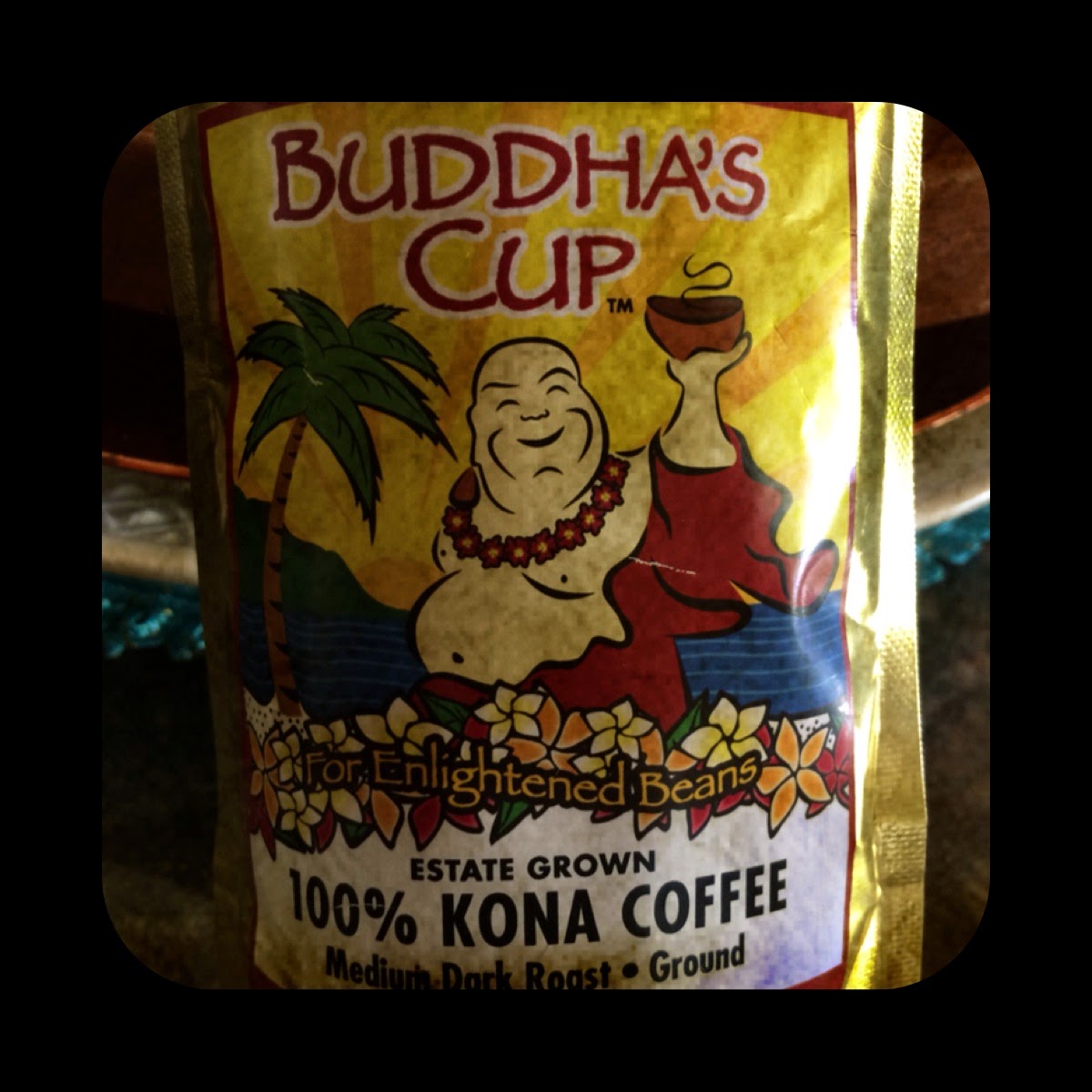
Does the Pure Land Even Have a Starbucks?
Image
Nagarjuna urges us not to mistake the finger for the moon. He tells us not to confound words and meaning, that is, not to mistake the secular words that are used to point to ultimate truth for that truth itself. We are able to see the moon because of the finger. However, we should not look at the finger and think that it is the moon. This is the meaning of the phrase, “Rely on the meaning, not on the words.” Here, the topic of our discussion is the significance of symbols. Dr. Nubuo Haneda got himself into considerable controversy and argument with some of the hard liners in Jodo Shin Shu (True Pure Land school) people a few years ago by advancing the idea that Amida was a symbol and not to be taken as a literal being living out in space somewhere. At the time I had already been teaching that message at a Zen center I worked at. I likened Amida, Tara, Manjushri and all the Cosmic Buddhas and Bodhisattvas to Jungian or cultural archetypes, though they are not exactly the same. Late...

Age Does Not Guarantee Wisdom

Image
Visit the  Hongaku Jodo Website Click here to subscribe to our newsletter. We observe reality from a point denied by our species (and cultural, and individual) makeup, our observations can only be made through representations, and representations always both add to and subtract from what they represent. —Derek Bickerton The idea of a skillful desire may sound a little off beat, but a mature mind intuitively pursues the desires it sees as skillful and drops those it perceives as not. As the Buddha explains when discussing Right Mindfulness and appropriate attention, a skillful desire is a way of fabricating a better delusion, one that is helpful to us on our journey towards the other shore. Fundamental to all living beings is the desire for happiness and avoid pain. Every other desire can be seen as a strategy for attaining that happiness. You want a new car, a better job, a sexual partner, or even have the desire for inner peace because you probably think it will...

The Faith Devotee, the Pure Land, and the Visuddhimagga

Image
Part 3 of the Visuddhimagga is called “Understanding (Paññá).” Nestled amongst the very boring and hard to understand sentences is §74 — §82. It comes across as a sort of Abhidhammic verification of the Pure Land School of Buddhism. It deals almost exclusively with the “faith devotee” described as one of the seven kinds of noble person. The list ranks them this way… (1)    The faith devotee, (2)   One liberated by faith, (3)   The body witness, (4)    The both-ways liberated, (5)    The Dhamma devotee, (6)    One attained to vision, and (7)    One liberated by understanding. Buddhaghosa cryptically ends the list by saying; “This knowledge of equanimity about formations is a condition for their being placed as these seven classes.” We can be grateful that he didn’t just leave it at that. He actual explains himself in a very clear and detailed way, in spite of the cumbersome translation. When a resolut...

How To Create a Better Delusion

Image
If the ways of the mind were simple, its problems would be simple too and therefore easy to fathom. In showing how to end its problems, the Buddha might have opted for simple and short inst ructions. He probably would have given us a single, all-encompassing approach to whatever happens to us in the present — like what we find today in the spiritual marketplace of New Age Buddhism. We would have received from the Buddha, instead of modern gurus, a Noble Single-fold Path. It might have read, “just mindfulness,” “just concentration,” “just non-reactive awareness,” “just choiceless awareness,” or “just meditation — whatever that means in our Western enlightenment market — or even “just emptiness,” another word with a myriad of meanings depending on the teacher. Like many current self-proclaimed voices of the Buddha, he might not have bothered to teach much at all, knowing that people could easily solve their problems on their own and give credit for it. "Trust your innate natur...

What’s Wrong With Buddhism?

Image
Visit the Hongaku Jodo Website Click here to subscribe to our newsletter. Traditional versus Secular Buddhism. Do we need secular Buddhism and what does that mean? We have to make a decision on what “Buddhism” means. It’s a shame that the word Buddhism was not copyrighted because now everyone can put the label of Buddhism on anything they do. But that doesn’t make it Buddhism. Until we decide as a global culture and as Buddhists what the we are referring to we will continually get the hodgepodge of classical Buddhism and something sort of like but not altogether identical to Buddhism which has been branded “Secular” or “New Age” Buddhism which seems very unlike the teaching of the Buddha. We call that Mārayāna. How do we even know if we are Buddhists or not? It depends on what we focus on. It is remarkable that amongst all the Buddhists in the world we find so much in common. We have Theravada Buddhists, the Mahayana Movement, Vajrayana, the Western “Tradition —...